If you’ve spent time on TikTok, Instagram, or late-night group chats, chances are you’ve heard someone mention “cuffing season.” Maybe a friend suddenly wanted a serious relationship after months of enjoying single life. Or perhaps your social feed became filled with cozy date nights, matching hoodies, and couples posting “soft launch” photos every winter.
That shift is exactly why people search for the phrase cuffing season meaning.
The term sounds playful, but it reflects something surprisingly real about human behavior. As temperatures drop and holidays approach, many people start craving emotional closeness, consistency, and companionship. Even people who normally avoid commitment may suddenly want someone to spend weekends, holidays, and cold evenings with.
At the same time, the phrase can be confusing. Is cuffing season serious? Is it just temporary dating? Moreover, Is it emotional manipulation, loneliness, or simply normal human connection?
This guide breaks it all down in a clear, relatable way so you can understand not only what cuffing season means, but why it has become such a huge part of modern dating culture.
Cuffing Season Meaning – Quick Meaning
Simple Definition
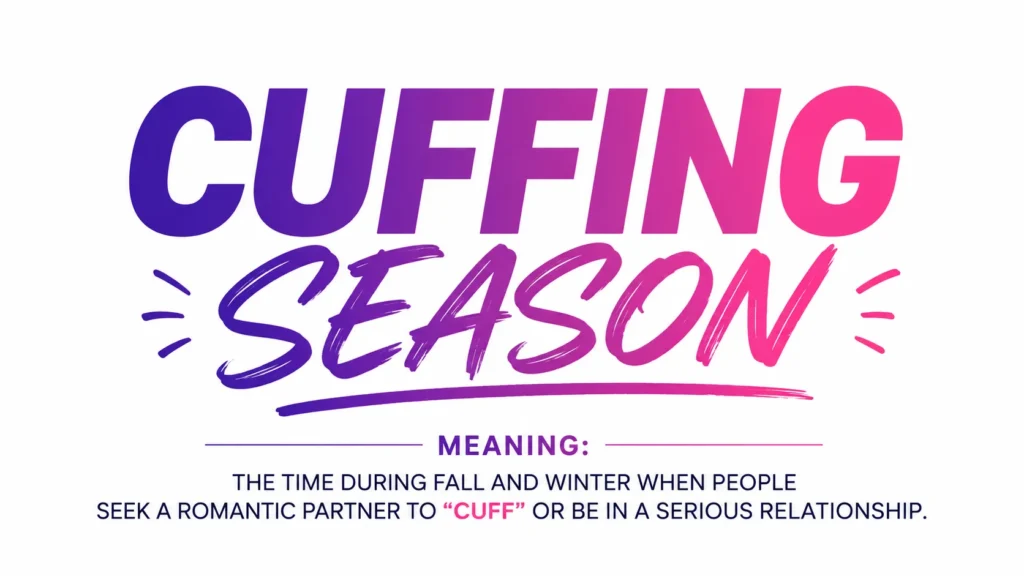
Cuffing season refers to a period—usually during fall and winter—when people become more interested in relationships, dating, or emotional companionship.
The word “cuffing” comes from the idea of being “handcuffed” or emotionally tied to someone for a season.
In Simple Terms
People often:
- Want someone to spend holidays with
- Feel lonelier during colder months
- Crave emotional comfort
- Prefer staying indoors with a partner
- Become more relationship-focused temporarily
Short Examples
“I wasn’t looking for love, but cuffing season got me.”
“Everybody suddenly wants to date when it gets cold outside.”
“She ignored me all summer and texted me in October. Classic cuffing season.”
Typical Timing
Cuffing season usually begins around:
- Late September
- October
- Early winter months
It often fades after:
- Valentine’s Day
- Early spring
- Warmer weather returning
Origin & Background
Where the Term Came From
The phrase started gaining popularity in African American urban slang communities in the early 2010s before spreading through Twitter, memes, blogs, and eventually TikTok culture.
Initially, it described people who only wanted relationships during colder months and returned to single life afterward.
Why Winter Changes Human Behavior
Cold weather naturally changes routines.
People go out less. Nights feel longer. Holidays become emotionally intense. Families gather together. Romantic movies dominate streaming platforms. Even simple things like warm drinks, blankets, and indoor activities create emotional associations with intimacy.
Psychologically, many people become more reflective and emotionally vulnerable during this time.
Social Media’s Role
Social media dramatically amplified the term.
Platforms like TikTok and Instagram turned cuffing season into:
- A meme
- A dating trend
- A lifestyle aesthetic
- A cultural joke
Videos showing cozy couples, winter date ideas, and “relationship season” content made the phrase feel universal.
How the Meaning Evolved
Originally, cuffing season implied temporary commitment.
Today, the meaning is broader. Some people use it jokingly, while others genuinely enter meaningful long-term relationships during this period.
For some, it’s casual fun.
For others, it becomes real love.
Real-Life Conversations
WhatsApp Conversation
Person A:
“Why are you suddenly replying fast now?”
Person B:
“It’s getting cold outside. I need emotional support.”
Person A:
“So this is cuffing season behavior?”
Person B:
“Absolutely.”
Instagram DM
Person A:
“You said relationships were stressful two months ago.”
And,
Person B:
“Yeah but now I want matching pajamas and movie nights.”
Person A:
“Winter changed you fast.”
TikTok Comments
Person A:
“Everybody becomes a relationship expert in October.”
Person B:
“No literally. Summer was for chaos. Winter is for cuddles.”
Text Message
Person A:
“You miss me or are you just lonely?”
Person B:
“Can it be both?”
That last line perfectly captures why cuffing season feels emotionally complicated for many people.
Emotional & Psychological Meaning
What Emotion Does It Express?
Cuffing season usually expresses:
- Loneliness
- Comfort-seeking
- Emotional vulnerability
- Desire for consistency
- Romantic nostalgia
People often want reassurance during uncertain or emotionally heavy seasons.
Why People Use the Phrase
Sometimes it’s used humorously.
Other times, it’s a subtle way to admit:
“I don’t want to be alone right now.”
That honesty resonates deeply because many people quietly feel the same way.
What It Reveals About Modern Communication
Modern dating culture can feel emotionally exhausting.
Apps encourage endless options. Casual situationships blur emotional boundaries. People often struggle to admit they want commitment.
Cuffing season gives people a socially acceptable reason to seek closeness without sounding overly serious.
Personal-Style Scenario
Imagine someone who spent the entire summer traveling, partying, and enjoying independence.
Then November arrives.
Their weekends become quieter. Friends start spending more time with partners. Holiday decorations appear everywhere. Suddenly, they begin texting someone they previously ignored.
That emotional shift is extremely common—and very human.
Usage in Different Contexts
Social Media
On social media, cuffing season is often used:
- As a joke
- In memes
- In dating advice videos
- In relationship content
Example:
“Applications for cuffing season are now open.”
Friends & Relationships
Friends commonly use the term to tease each other when someone suddenly becomes romantic during winter.
Example:
“You only want a boyfriend because it’s cuffing season.”
Work & Professional Settings
The phrase is generally too casual for professional environments.
Using it at work could sound overly personal or immature depending on the setting.
Casual vs Serious Tone
The tone depends on context.
Casual:
“I need a cuffing season partner.”
Serious:
“I realized I actually wanted emotional stability this winter.”
The second version reflects deeper emotional awareness.
When NOT to Use It
Professional Situations
Avoid using the phrase:
- In formal emails
- During interviews
- In workplace presentations
- With clients or authority figures
It can sound unprofessional or overly personal.
Sensitive Emotional Situations
Do not casually label someone’s genuine relationship as “just cuffing season” if emotions are involved.
That can feel dismissive or disrespectful.
Cultural Sensitivity
Not everyone understands internet slang equally.
Older generations or people unfamiliar with Western online culture may misunderstand the term completely.
Situations That May Cause Confusion
Some people interpret cuffing season negatively because it implies temporary emotional interest.
If you’re seriously dating someone, joking about cuffing season too much may create insecurity.
Common Misunderstandings
People Think It Always Means Fake Love
Not true.
Many real, healthy relationships begin during cuffing season.
Timing doesn’t automatically make feelings less genuine.
Some Believe It’s Only About Romance
Sometimes it’s more about emotional comfort than intense romance.
People often simply want companionship.
Literal vs Figurative Meaning
The phrase is figurative.
Nobody is literally “cuffing” someone physically. It refers emotionally to being tied down or committed temporarily.
Tone Confusion
Depending on tone, the phrase can sound:
- Funny
- Flirty
- Cynical
- Romantic
- Dismissive
That’s why context matters so much.
Comparison Table
| Expression | Meaning | Tone | Typical Use |
|---|---|---|---|
| Cuffing Season | Seeking relationships during colder months | Playful/romantic | Dating culture |
| Situationship | Undefined romantic connection | Confusing | Modern dating |
| Soft Launch | Subtly revealing a relationship online | Trendy | Social media |
| Love Bombing | Excessive affection for manipulation | Negative | Toxic relationships |
| Summer Fling | Short-term romance during summer | Fun/casual | Vacation dating |
| Settling Down | Seeking long-term stability | Serious | Mature relationships |
| Single Era | Enjoying independence | Empowering | Self-growth phase |
| Ghosting | Suddenly disappearing from communication | Negative | Online dating |
Key Insight
Cuffing season stands out because it blends humor with genuine emotional behavior. People joke about it online, but underneath the memes is a real desire for warmth, stability, and connection.
Variations / Types
Winter Cuffing
Seeking a relationship specifically during winter months.
Holiday Relationship
Dating someone mainly to avoid loneliness during holidays.
Soft Cuffing
Emotionally exclusive without officially labeling the relationship.
Social Media Cuffing
Posting romantic content heavily during winter for aesthetic or emotional validation.
Temporary Cuffing
A short-term seasonal relationship with no long-term expectations.
Emotional Cuffing
Becoming emotionally attached for comfort rather than romance alone.
Long-Term Cuffing
A relationship that begins seasonally but develops into something serious.
Friendship Cuffing
Wanting constant companionship from friends during colder months.
Digital Cuffing
Increased texting, FaceTiming, and online emotional dependence during winter.
Reverse Cuffing
Avoiding relationships during cuffing season because of emotional burnout or distrust.
How to Respond When Someone Uses It
Casual Replies
- “Winter really changes people.”
- “Looks like cuffing season started early.”
- “Not the seasonal romance again.”
Funny Replies
- “Are you emotionally available or just cold?”
- “This sounds weather-related.”
- “Your loneliness activated with the temperature drop.”
Mature Replies
- “It’s normal to want connection.”
- “Just make sure the feelings are genuine.”
- “Seasonal emotions can still lead to something real.”
Respectful Replies
- “I understand wanting companionship.”
- “As long as everyone is honest, that’s okay.”
- “Emotional comfort matters.”
Regional & Cultural Usage
Western Culture
In the US, Canada, and parts of Europe, cuffing season is strongly tied to dating culture, social media trends, and winter lifestyle aesthetics.
It’s widely understood among younger generations.
Asian Culture
In some Asian cultures, the phrase itself may be less common, but the emotional behavior still exists.
People may become more relationship-focused around holidays or colder seasons without using the exact slang term.
Middle Eastern Culture
Usage varies significantly.
In more conservative communities, open discussion about seasonal dating trends may be less accepted publicly. However, younger online audiences still recognize the term through global social media.
Global Internet Usage
TikTok and Instagram helped the phrase become internationally recognizable.
Even people who don’t actively date online often understand the meme culture surrounding it.
Generational Differences
Gen Z:
- Uses the phrase casually and humorously
- Often shares memes about it
- Connects it to dating app culture
Millennials:
- May use it more ironically
- Often discuss its emotional implications more deeply
Older generations:
- Might understand the behavior but not the slang itself
Is It Safe for Kids?
Context Matters
The phrase itself is generally harmless.
However, it belongs to dating culture and may involve conversations about relationships, emotional dependency, or romantic behavior.
Teenagers commonly encounter the term online through memes and social media.
Parents and educators should focus less on banning slang and more on helping young people understand:
- Healthy relationships
- Emotional honesty
- Respectful communication
- Temporary vs serious commitment
FAQs
What does cuffing season mean in slang?
It means a time—usually during fall and winter—when people seek relationships or emotional companionship more actively.
Why is it called cuffing season?
The word “cuffing” refers to being emotionally tied or “handcuffed” to someone romantically for a period of time.
Is cuffing season a real thing?
Yes, many people genuinely feel more relationship-oriented during colder months due to emotional and social factors.
When does cuffing season start?
Most people associate it with late September through early winter.
Is cuffing season toxic?
Not necessarily. It only becomes unhealthy if people are dishonest about intentions or use others emotionally.
Can cuffing season relationships become serious?
Absolutely. Many long-term relationships begin during cuffing season and continue well beyond winter.
Is cuffing season only for young people?
No. While Gen Z popularized the phrase online, people of all ages experience seasonal emotional shifts and desire companionship.
Conclusion
Understanding the cuffing season meaning goes far beyond internet slang. At its core, the phrase reflects something deeply human: the desire for closeness, warmth, and emotional security during emotionally intense seasons.
Some people joke about it. Others genuinely feel its effects every year. Either way, the popularity of the term says a lot about modern relationships and how people communicate emotional needs today.
There’s nothing wrong with wanting companionship when life feels colder—emotionally or physically. What matters most is honesty, emotional awareness, and treating people with respect instead of using them as temporary comfort.
Whether cuffing season leads to a cozy winter romance or simply sparks self-reflection, understanding the phrase helps you navigate modern conversations with more confidence and emotional clarity.