When people search for “what is the meaning of MMS”, they are usually trying to decode a term they have seen in a text message, social media chat, or phone setting. At first glance, it looks simple—but the meaning changes depending on context.
For some, MMS is just a phone feature. For others, it appears in slang conversations, online discussions, or even misunderstandings in chats. That’s why this term often creates confusion, especially among younger users who mix texting slang with technical mobile features.
In this guide, we’ll break everything down in a clear, real-world way so you understand exactly what MMS means, how it works, and how people actually use it today in digital communication.
MMS – Quick Meaning
Clear Definition
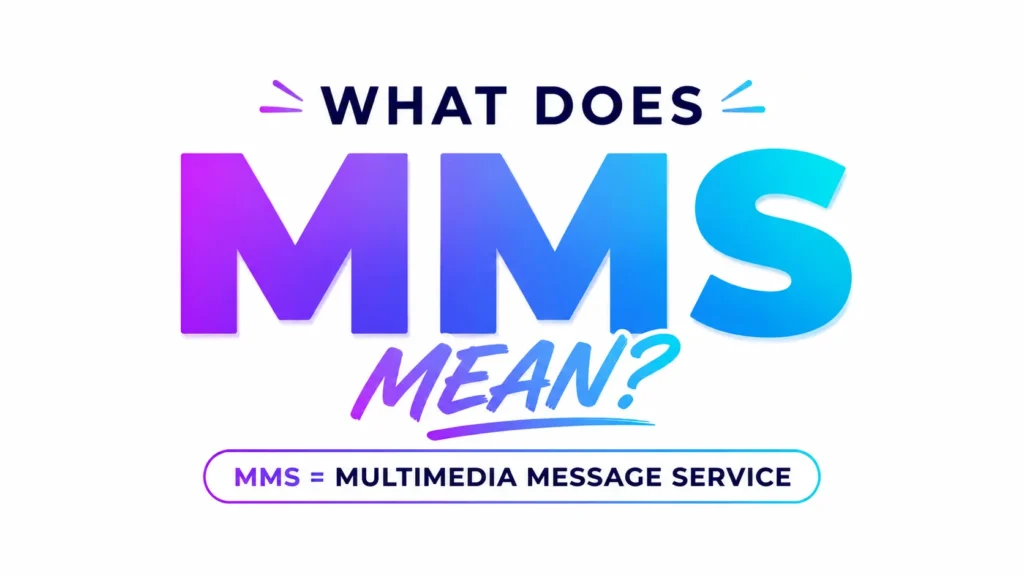
MMS stands for “Multimedia Messaging Service.”
It is a messaging system that allows users to send:
- Images
- Videos
- Audio files
- GIFs
- Longer text messages with media attachments
Unlike SMS (Short Message Service), which only supports plain text, MMS adds visual and audio content.
Simple Understanding
Think of it like this:
- SMS = Text only message
- MMS = Text + pictures/videos/audio
Real Examples
- “I sent you the picture via MMS.”
- “This video was too big for SMS, so I used MMS.”
- “Your phone doesn’t support MMS messages properly.”
Origin & Background
Where MMS Came From
MMS was developed in the early 2000s as mobile phones started becoming more advanced. People no longer wanted to send only text—they wanted to share moments visually.
Telecom companies introduced MMS as an upgrade to SMS, allowing multimedia sharing over mobile networks.
Cultural Influence
As smartphones became common, MMS played a key role in:
- Sharing camera photos before WhatsApp existed
- Sending holiday pictures
- Sharing short video clips
Before social media apps dominated communication, MMS was the “original photo message.”
Social Media Impact
With the rise of apps like:
- Snapchat
MMS slowly became less popular, but it still exists as a backup system when internet-based messaging fails.
Evolution Over Time
- 2000s: Peak usage of MMS
- 2010s: Decline due to WhatsApp
- 2020s: Mostly background/technical usage
Real-Life Conversations (MANDATORY)
WhatsApp Conversation
Person A: Did you get the photo I sent?
And,
Person B: No, I think it didn’t come through.
Person A: I sent it as MMS, maybe your phone blocked it.
Instagram DM
Person A: Why didn’t you send the video here?
And,
Person B: It was too heavy, I used MMS instead.
Person A: Ohh I rarely use that anymore.
TikTok Comment Thread
User1: How did people send videos before WhatsApp?
User2: We used MMS back in the day 😂
User3: It used to cost extra money too!
Text Message
Friend: Send me the pic quickly
You: I’ll send it via MMS, check your messages
Friend: Got it 👍
Emotional & Psychological Meaning
MMS is not just a technical term—it reflects a stage in digital communication history.
What Emotion It Expresses
- Effort (because MMS required more steps and sometimes cost money)
- Nostalgia (older users remember it fondly)
- Simplicity (before apps became complex)
Why People Use It Today
Even now, people mention MMS when:
- They are referring to old messaging habits
- They are unsure whether media will send through SMS
- They are discussing phone settings or telecom services
What It Reveals About Communication
MMS shows how communication has evolved:
- From text-only to multimedia
- From paid messaging to internet-based free apps
- From slow delivery to instant sharing
Personal-Style Scenario
Imagine someone in a rural area with limited internet. They still rely on MMS to send a photo of an important document. In that moment, MMS is not outdated—it becomes essential.
Usage in Different Contexts
Social Media
MMS is often mentioned in posts like:
- “Old school MMS memories 😂”
- “Before Instagram, we used MMS for everything”
Friends & Relationships
Used when:
- Sending photos directly from gallery
- Sharing media without internet apps
- Dealing with older phones
Work / Professional Settings
Rare, but sometimes used in:
- Telecom industries
- Technical support
- Mobile service troubleshooting
Casual vs Serious Tone
- Casual: “I’ll MMS it to you lol”
- Serious: “Please ensure MMS settings are enabled on your device”
When NOT to Use It
In Modern App Conversations
If you’re using WhatsApp or Messenger, MMS is unnecessary.
In Professional Digital Communication
It may sound outdated or confusing in tech-savvy workplaces.
Cultural Sensitivity
In some regions, MMS is misunderstood due to misuse of the term in unrelated contexts online. Always ensure clarity.
When It May Cause Confusion
- Younger users may not know what MMS is
- Some may think it refers only to media files, not a system
Common Misunderstandings
“MMS means any video message”
Not exactly. MMS is a delivery system, not just the video itself.
“It works like WhatsApp”
Wrong. MMS uses mobile networks, not internet apps.
“It is completely outdated”
Not fully true. It still works in many phones as a fallback option.
“MMS is free everywhere”
In some regions, MMS still costs extra depending on carrier plans.
Comparison Table
| Feature | SMS | MMS | ||
|---|---|---|---|---|
| Media Support | No | Yes | Yes | Yes |
| Internet Required | No | No | Yes | Yes |
| Cost | Low | Higher (sometimes) | Free | Free |
| Speed | Fast | Medium | Instant | Medium |
| Popularity | Medium | Low | Very High | High |
Key Insight
MMS sits between traditional texting and modern internet messaging. It bridges the gap between old mobile communication and today’s app-based messaging world.
Variations / Types
1. Standard MMS
Basic multimedia message with images or videos.
2. Picture Message MMS
Used mainly for sending photos.
3. Video MMS
Short video clips sent through mobile network.
4. Audio MMS
Voice recordings or sound files.
5. Group MMS
One multimedia message sent to multiple contacts.
6. Carrier MMS
Messages processed directly by telecom providers.
7. Automated MMS
Used in marketing campaigns for sending media ads.
8. Fallback MMS
Automatically used when internet messaging fails.
9. Legacy MMS
Older phone system usage without smartphones.
10. Enhanced MMS
Improved versions supporting higher quality media.
How to Respond When Someone Uses It
Casual Replies
- “Yeah, I got it 👍”
- “Send it via MMS if WhatsApp fails”
Funny Replies
- “MMS? Bro we’re in 2026 😂”
- “Throwback technology activated”
Mature Replies
- “Yes, I understand. Please send it through MMS if needed.”
Respectful Replies
- “Sure, I’ll check my messages.”
Regional & Cultural Usage
Western Culture
Mostly replaced by internet apps, MMS is rarely used in daily life.
Asian Culture
Still exists in telecom services and older devices in some areas.
Middle Eastern Culture
Used mainly in technical or carrier-level communication.
Global Internet Usage
Online, MMS is often referenced humorously as “old-school messaging.”
Generational Differences
- Gen Z: Rarely uses MMS, may not fully understand it
- Millennials: Familiar with early MMS era
- Older generations: Still recognize and sometimes use it
Is It Safe for Kids?
Yes—MMS itself is a safe communication tool. It simply sends media messages through mobile networks.
However:
- Parents should monitor media sharing habits
- Ensure kids understand safe messaging practices
- Teach them not to share personal content with strangers
FAQs
What does MMS mean in simple words?
MMS means sending pictures, videos, or audio messages through mobile phones.
Is MMS the same as WhatsApp?
No, MMS uses mobile networks, while WhatsApp uses the internet.
Do MMS messages cost money?
Sometimes yes, depending on your mobile carrier plan.
Why is my phone sending MMS instead of SMS?
Because the message includes media or is too large for SMS.
Is MMS still used today?
Yes, but mostly as a backup or in older systems.
Can MMS send videos?
Yes, but usually short videos due to size limits.
Why do people talk about MMS online?
Often in a nostalgic or technical context about older messaging systems.
Conclusion
Understanding what is the meaning of MMS gives you a clear picture of how mobile communication has evolved over time. It is more than just a technical term—it represents an era when sending a simple photo required more effort and cost.
Today, MMS may not be the first choice for messaging, but it still plays an important role in mobile networks and remains a key part of communication history.
Whether you’re exploring phone settings or decoding old-school texting references, MMS is a reminder of how far digital communication has come—and how quickly it continues to evolve.