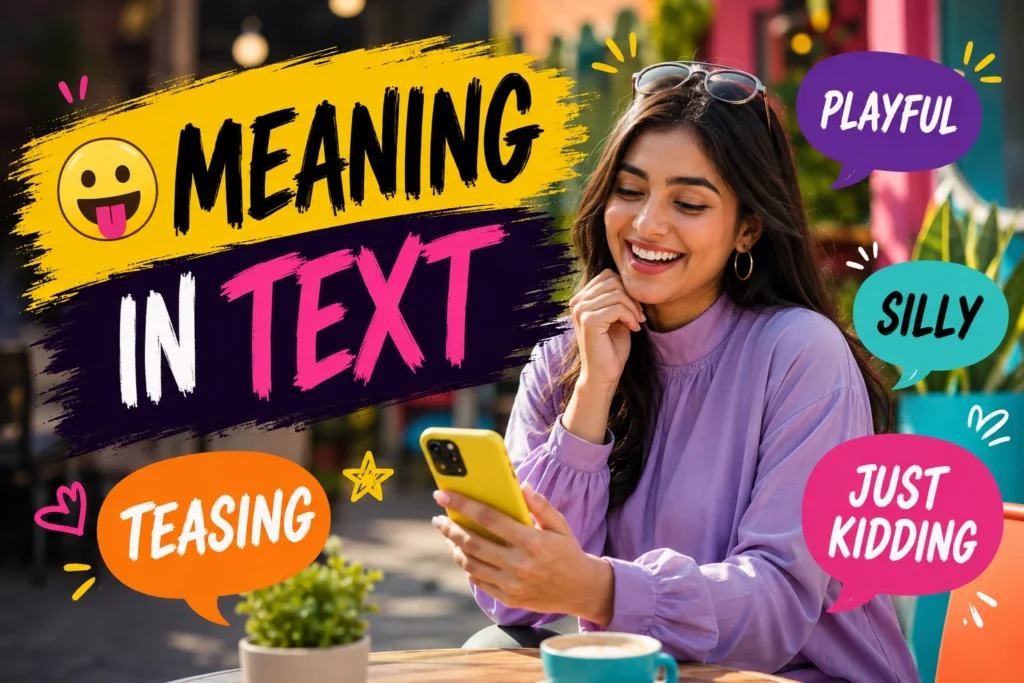
The 😛 meaning in text is usually playfulness, teasing, silliness, or “I’m only joking.” Officially called the Face with Tongue emoji, it shows a smiling face sticking out its tongue.
When someone sends 😛, they are often trying to make a message feel less serious. It may communicate:
- “I’m joking.”
- “Just teasing you.”
- “I’m feeling silly.”
- “Don’t take that seriously.”
- “I’m being cheeky.”
- “That sounds delicious.”
- “I’m playfully flirting with you.”
For example, “I ate your chocolate 😛” sounds mischievous rather than apologetic. The emoji tells you that the sender knows what they did and is teasing you about it.
However, 😛 can sometimes feel flirty, sarcastic, immature, or even dismissive. Its intended meaning depends on your relationship, the surrounding words, and the topic being discussed.
😛 Meaning in Text – Quick Explanation
The 😛 emoji represents a smiling person sticking out their tongue. It is mainly used to add a playful or unserious tone to digital conversations.
Common meanings include:
- Playful teasing
- Lighthearted joking
- Friendly sarcasm
- Mischievous behaviour
- Excitement about food
- Childlike silliness
- Mild, playful flirting
- Softening a boast or bold statement
Examples include:
“I’m obviously the favourite child 😛”
“You’ll never beat my high score 😛”
“That pizza looks amazing 😛”
In the first two messages, 😛 shows humorous confidence or teasing. In the third, it may represent craving delicious food.
What Does 😛 Mean When Someone Sends It Alone?
When 😛 appears without any words, it can mean:
- “I’m being silly.”
- “I’m teasing you.”
- “You know what I mean.”
- “I’m not taking this seriously.”
- “That was cheeky.”
- “I don’t have a serious answer.”
You must look at the previous message to understand the reply.
For example:
You: “Did you steal my hoodie again?”
Them: “😛”
Here, the emoji acts like a playful admission. The sender is probably saying, “Maybe I did, and I’m not sorry.”
Origin and Background of the 😛 Emoji
Before modern emojis, people used keyboard characters to create facial expressions. The emoticon :P represented a face sticking out its tongue.
If you tilt your head, the colon forms the eyes and the capital P resembles a tongue coming out of a mouth:
:P
People used :P in chatrooms, forums, instant messages, and early text messages to mark jokes or playful comments. Variations included:
:-P:pXPxP;P
The 😛 emoji became the visual successor to these emoticons. It preserved their mischievous tone while making the facial expression instantly recognisable.
How Social Media Shaped Its Meaning
On platforms such as WhatsApp, Instagram, Snapchat, TikTok, Discord, and Facebook, 😛 became a convenient way to soften written language.
Text does not include facial expressions or vocal tone. A sentence such as “You’re terrible” could appear insulting on its own. Adding 😛 transforms it into friendly teasing:
“You’re terrible 😛”
The emoji acts like a smile and a playful tongue gesture in face-to-face communication. Still, it cannot repair every harsh message. If the words are genuinely cruel, adding 😛 does not automatically make them harmless.
Real-Life Conversations Using 😛
These conversations show how the Face with Tongue emoji changes according to context.
WhatsApp: Friendly Teasing
Person A: Why didn’t you save me any cake?
Person B: Because I was hungry 😛
and,
Person A: You owe me two slices now.
Person B: Fine, but I’m eating one of those too.
The emoji makes Person B’s response mischievous rather than defensive. Both friends understand that the disagreement is playful.
Instagram DM: Light Flirting
Person A: You looked suspiciously good in that picture.
Person B: Only suspiciously good?
and,
Person A: Okay, extremely good 😛
Person B: That’s a better answer.
Here, 😛 softens a direct compliment. The sender is showing attraction while keeping the exchange relaxed and teasing.
TikTok Comments: Silly Confidence
Creator: No one can convince me this dance is difficult.
Commenter: Then post yourself doing it 😛
Creator: Suddenly, I have no internet connection.
The commenter issues a playful challenge. The tongue-out face prevents the reply from sounding aggressive.
Text Message: Softening a Boast
Person A: Who won the game?
and,
Person B: Me, obviously 😛
Person A: You won once. Stay humble.
The sender uses 😛 to show that “obviously” is humorous confidence rather than serious arrogance.
Emotional and Psychological Meaning of 😛
The 😛 emoji helps people create emotional distance from their words. It allows them to say something bold, teasing, or mildly embarrassing without fully committing to a serious tone.
For example:
“Maybe I only came because you were there 😛”
The sender may genuinely like the recipient, but the emoji provides protection. If the response is positive, the conversation can become flirtier. If the response feels uncomfortable, the sender can claim they were only joking.
This emotional flexibility makes 😛 common during early flirting. It helps people test interest without making a direct romantic confession.
The emoji can reveal:
- Comfort and familiarity
- A desire to make someone laugh
- Mischievous confidence
- Nervousness hidden behind humour
- A wish to reduce tension
- Playful attraction
- Reluctance to speak seriously
- A desire for attention
Imagine that a friend regularly teases you about your favourite singer. After secretly buying you concert tickets, they text, “Maybe your terrible music taste is useful after all 😛.”
The emoji tells you that the criticism is affectionate. Their action—buying the tickets—provides even stronger evidence of care.
Emojis can support emotional communication, but behaviour and complete messages remain more meaningful than one symbol.
How 😛 Is Used in Different Contexts
In SMS, iMessage, and WhatsApp
In direct text messages, 😛 commonly signals teasing between people who already understand each other’s humour.
Examples include:
- “I told you I’d win 😛”
- “Guess who ate the leftovers 😛”
- “You miss me, admit it 😛”
- “I’m borrowing your jacket again 😛”
- “Maybe I was waiting for your message 😛”
Because the emoji is informal, it feels most natural among friends, siblings, couples, or close classmates.
On Instagram and Snapchat
On Instagram, 😛 may accompany funny selfies, food pictures, cheeky captions, or playful comments.
A person might caption a photo:
“Pretending I didn’t take 50 pictures first 😛”
On Snapchat, the emoji can make a selfie feel carefree or flirty. It may also appear as a quick reaction when someone is joking.
On TikTok
In TikTok comments, 😛 often marks a playful challenge, bold opinion, or unserious criticism:
“We need part two immediately 😛”
“I could definitely do this better 😛”
The emoji helps prevent confident statements from appearing overly hostile.
Between Friends
Among friends, 😛 usually represents harmless teasing. It may replace a playful facial expression that would naturally occur during an in-person conversation.
Close friends can often recognise the intended joke because they understand each other’s personalities and boundaries.
In Romantic Relationships
Partners may use 😛 when teasing, joking about attraction, stealing food, or making a mildly suggestive comment.
For example:
“I only miss you a little 😛”
The sender probably misses their partner more than they admit. The emoji hides affection behind playful denial.
In Professional Settings
The 😛 emoji is usually unsuitable for formal workplace communication. It can appear immature or overly familiar when sent to clients, managers, teachers, or unfamiliar colleagues.
A close team may occasionally use it in a private casual chat. Even then, choose a neutral smile such as 🙂 when tone could be misunderstood.
When Not to Use 😛
The Face with Tongue emoji works best in light conversations. It should not be used when the situation demands sincerity, sensitivity, or professional respect.
Avoid using 😛:
- During a serious argument
- After hurting someone’s feelings
- In condolences
- When delivering bad news
- In formal emails
- In apologies for significant mistakes
- When discussing illness or grief
- With someone who dislikes teasing
- After making a discriminatory or offensive comment
- When personal boundaries are unclear
- In customer-service complaints
- When responding to someone’s vulnerability
For example:
“Sorry I shared your secret 😛”
This does not sound like a genuine apology. The emoji makes the sender appear dismissive because the situation involves trust.
A more appropriate response would be:
“I’m genuinely sorry I shared something you told me privately. I understand why you’re hurt, and I accept responsibility.”
Be Careful With Cultural Differences
Sticking out the tongue can carry different meanings across cultures. Many internet users recognise 😛 as playful, but others may view it as rude, childish, disrespectful, or suggestive.
When texting someone from a different cultural or professional background, use clear language rather than assuming that the emoji will communicate your intended tone.
Common Misunderstandings About 😛
😛 Is Not Always Flirty
The emoji can support flirting, but its primary tone is playful. Friends, siblings, and family members use it without any romantic meaning.
“You can’t beat me at Mario Kart 😛” is normally competitive teasing, not a romantic signal.
It Does Not Automatically Make an Insult Acceptable
Some people add 😛 after a hurtful comment and expect the recipient to interpret it as humour. Emojis do not erase the emotional impact of words.
If the joke targets someone’s appearance, insecurity, culture, identity, or personal struggle, 😛 may make the message feel more mocking rather than less offensive.
It Can Represent Food Cravings
Because the emoji shows a tongue, it sometimes expresses enjoyment or anticipation of delicious food:
“Homemade brownies tonight 😛”
In this context, it resembles “yum” or “I can’t wait to eat that.”
It May Hide Genuine Feelings
A person can use 😛 to disguise a sincere compliment or romantic interest:
“You looked kind of cute today 😛”
The sender may genuinely find you attractive but feel nervous about saying it directly.
It Is Different From 😜
Both are tongue-out emojis, but 😜 includes a wink. The wink usually creates a more obviously cheeky, flirtatious, or mischievous tone.
😛 Compared With Similar Emojis
| Emoji | Common meaning | Typical tone | Example |
|---|---|---|---|
| 😛 | Playfulness or teasing | Silly and friendly | “I won again 😛” |
| 😜 | Cheeky joke or flirtation | Mischievous | “Maybe I like you 😜” |
| 😝 | Extreme silliness or playful disgust | Wild and energetic | “That challenge was terrible 😝” |
| 🤪 | fun or chaotic behaviour | Exaggerated and goofy | “I haven’t slept all night 🤪” |
| 😋 | Delicious food or pleased enjoyment | Happy and satisfied | “That cake looks perfect 😋” |
| 😉 | Teasing, hidden meaning, or flirting | Suggestive and confident | “You know where to find me 😉” |
| 😏 | Confidence or suggestive interest | Flirty and knowing | “I noticed you looking 😏” |
| 😂 | Strong laughter | Amused | “You actually believed me 😂” |
| 🙃 | Irony, frustration, or awkwardness | Dry or passive-aggressive | “Another meeting at 7 a.m. 🙃” |
| 😇 | Innocence, often playfully false | Sweet or mischievous | “I didn’t touch your snacks 😇” |
| 🤭 | Shyness, surprise, or hidden laughter | Cute or embarrassed | “Did I really say that? 🤭” |
| 😈 | Mischief or stronger flirtation | Bold and provocative | “I have a better idea 😈” |
Key Insight
😛 is generally lighter and less suggestive than 😏 or 😈. It communicates simple fun, although surrounding words can still make it flirtatious.
Popular Variations and Types of 😛
1. 😛 Alone
Sent alone, it usually represents teasing, silliness, or a playful reaction to the previous message.
2. 😛😂
This combination makes the joke unmistakable. The sender is being silly and laughing about it.
3. 😛❤️
A heart adds affection. The message may come from a loving friend, family member, or romantic partner.
4. 😛😉
The wink adds a cheekier quality. This combination is more likely to feel flirty than 😛 alone.
5. 😛😛
Repeating the emoji increases its playful energy. It can make the sender appear especially silly or excited.
6. 😛✌️
The peace sign creates a carefree, friendly vibe. It often appears in captions and casual selfies.
7. 😛💕
The hearts make the expression cute and affectionate. It may signal a close friendship or gentle romance.
8. 😛🔥
This combination may react to an attractive picture, exciting event, impressive outfit, or bold performance.
9. 😛🍕
When paired with food, the emoji usually means “yum,” hunger, or excitement about eating.
10. 😛🙈
This suggests playful embarrassment. The sender may have said something bold and now feels shy.
11. 😛😈
The devil emoji intensifies the mischievous tone. Depending on the relationship, it may become suggestive.
12. 😛
The classic text emoticon has the same basic meaning as 😛. It often feels nostalgic, casual, or deliberately old-school.
How to Respond When Someone Sends 😛
The best response depends on whether the message is friendly, funny, flirty, or uncomfortable.
Casual Replies
- “You’re so silly 😂”
- “Very mature.”
- “I knew you were joking.”
- “Here we go again.”
- “You’re impossible.”
- “Okay, troublemaker.”
Funny Replies
- “Put your tongue back in your mouth.”
- “That face won’t save you.”
- “Straight to jail.”
- “I’m telling your mother.”
- “You’ve officially lost speaking privileges.”
- “Apology rejected 😛”
Flirty Replies
Use these only if you welcome the attention:
- “Are you flirting with me? 😉”
- “Careful, I might tease you back.”
- “You’re kind of cute when you do that.”
- “That emoji looks suspicious.”
- “Someone is feeling playful today.”
- “Maybe I missed you too 😛”
Mature Replies
- “I know you’re joking.”
- “That made me smile.”
- “I understand what you meant.”
- “Can you explain what you mean?”
- “I’m not sure whether you’re serious.”
Replies When You Feel Uncomfortable
- “I don’t find that funny.”
- “Please don’t joke about that.”
- “That message made me uncomfortable.”
- “I would rather keep our conversation friendly.”
- “This topic is serious to me.”
- “Please respect my boundaries.”
You do not have to match someone’s playful or flirty energy. A direct response is appropriate when their tone crosses your boundaries.
Regional, Cultural, and Generational Usage
Western Internet Culture
In Western texting culture, 😛 is broadly understood as a playful tongue-out face. It continues the meaning of the older :P emoticon used in instant messaging and online forums.
Asian Digital Culture
The emoji is common in gaming, fandom, friendship, and social-media conversations. It may represent cuteness, playful embarrassment, or light teasing.
Cultural communication styles vary widely, so some users may prefer softer expressions such as 😊 or 🤭.
Middle Eastern Digital Culture
Young users often employ 😛 in casual conversations with friends, siblings, or partners. Its flirty use may be interpreted differently depending on personal values and the closeness of the relationship.
A tongue-out selfie or emoji can feel harmless among friends but too forward in a formal or unfamiliar interaction.
Gen Z Versus Millennials
Millennials may associate 😛 with the classic :P emoticon and early online-chat culture. They often use it to mark obvious teasing.
Gen Z users may prefer newer expressive emojis such as 😭, 🤪, 💀, or 🙃, but 😛 remains recognisable. Some use it sincerely, while others use it with a deliberately playful or nostalgic tone.
Is 😛 Safe for Kids?
The 😛 emoji is generally safe for children. It most often represents silliness, playful teasing, or excitement about food.
Parents should still evaluate the whole conversation. An innocent emoji can appear within inappropriate communication, especially when sent by an unknown person.
Children should also understand that teasing is only fun when everyone feels comfortable. Adding 😛 does not make bullying or cruel comments acceptable.
Frequently Asked Questions About 😛
What does 😛 mean in a text message?
The 😛 emoji usually means the sender is joking, teasing, feeling silly, or being playfully mischievous. It helps make a message sound less serious.
What does 😛 mean from a girl?
From a girl, 😛 may indicate friendly teasing, silliness, comfort, or mild flirting. It does not automatically mean romantic attraction.
What does 😛 mean from a guy?
From a guy, 😛 commonly represents joking or playful confidence. It may become flirty when paired with compliments, romantic hints, or repeated personal attention.
Is the 😛 emoji flirty?
It can be flirty, but it is usually more playful than romantic. A compliment such as “You looked cute today 😛” is more likely to carry flirtatious meaning.
What is the difference between 😛 and 😜?
😛 is a simple tongue-out face associated with silliness. 😜 adds a wink, making it appear cheekier, more mischievous, or more openly flirty.
What does 😛 mean after an insult?
It may show that the sender intended the insult as teasing. However, if the comment was genuinely hurtful, the emoji does not remove its negative impact.
What does 😛 mean when discussing food?
When used with food, 😛 can mean “yum,” “I’m hungry,” or “that looks delicious.” The 😋 emoji is more commonly used for this purpose.
Conclusion
The 😛 meaning in text is primarily playfulness, teasing, silliness, or “I’m only joking.” It gives messages a light, mischievous tone and often replaces the facial expression of sticking out your tongue in person.
Between friends, 😛 commonly marks harmless jokes and playful competition. Between romantic interests, it may soften a compliment or create low-pressure flirtation. When paired with food, it can express hunger or excitement about something delicious.
Context remains essential. A tongue-out face cannot transform a cruel comment into a friendly joke, and it should not be used when someone expects a serious apology or thoughtful response.
Read the surrounding message, consider your relationship with the sender, and notice whether their behaviour supports the playful tone. Most of the time, 😛 simply means: “Relax—I’m having fun with you.”