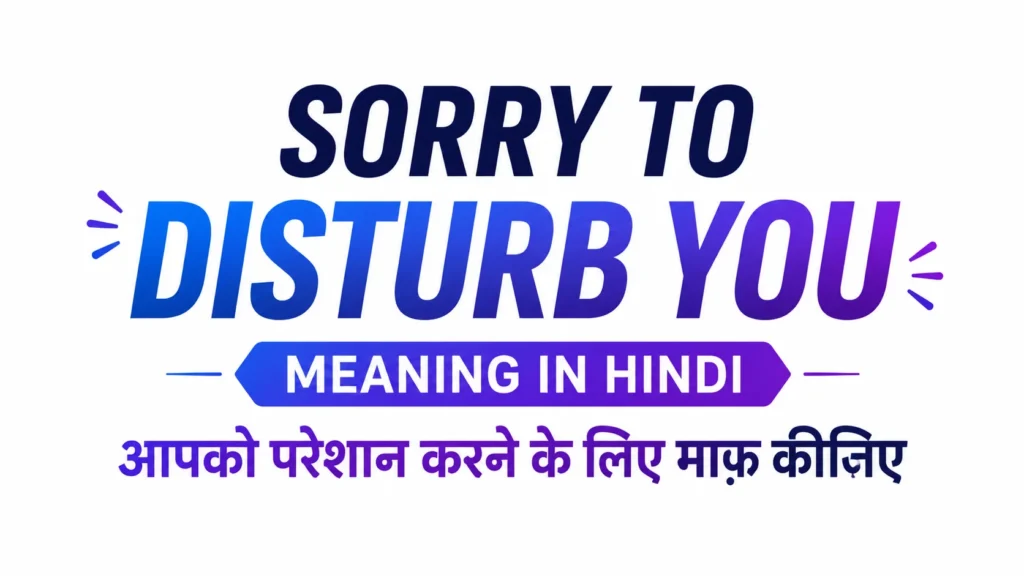
The phrase “sorry to disturb you” is one of the most commonly used polite expressions in English conversations. People use it before asking for help, sending a message, interrupting someone, or starting a difficult conversation. Because of its emotional tone and respectful nature, many learners search for the exact “sorry to disturb you meaning in Hindi” to understand when and how to use it naturally.
In Hindi, this phrase is not just about “disturbing” someone. It often reflects humility, politeness, emotional awareness, and social manners. That is why direct translation alone sometimes feels incomplete.
You may have seen this phrase in:
- WhatsApp messages
- Office emails
- Instagram DMs
- Customer support chats
- School or college conversations
- Relationship texts
Sometimes it sounds formal. and, Sometimes emotional. Sometimes overly apologetic.
This article explains the complete meaning, emotional depth, cultural usage, modern texting style, and real-life examples behind the phrase so you can use it confidently in daily communication.
Sorry to Disturb You Meaning in Hindi – Quick Meaning
The most common Hindi meanings of “sorry to disturb you” are:
- आपको परेशान करने के लिए माफ़ कीजिए
- आपको तंग करने के लिए क्षमा चाहता/चाहती हूँ
- डिस्टर्ब करने के लिए सॉरी
- माफ़ कीजिए, आपको बीच में परेशान कर रहा/रही हूँ
The phrase is usually used before:
- Asking a favor
- Interrupting someone’s work
- Sending an unexpected message
- Calling late at night
- Requesting help politely
Simple Definition
“Sorry to disturb you” means:
“I know you may be busy or resting, but I need your attention for a moment.”
It is a respectful and emotionally aware way to begin communication.
Quick Examples
“Sorry to disturb you, but can you check this file?”
“Sorry to disturb you at night.”
“Sorry to disturb you again, I just needed quick help.”
These examples show politeness rather than guilt.
Origin & Background
The Polite Culture Behind the Phrase
English-speaking cultures, especially British communication culture, strongly value polite interruption. Instead of directly asking questions, people often soften conversations with phrases like:
- “Excuse me”
- “Sorry to bother you”
- “Hope I’m not disturbing you”
- “Sorry to disturb you”
Over time, this became a normal communication habit in workplaces, schools, and customer interactions.
Cultural Influence in India & South Asia
In South Asian cultures, respect in language matters deeply. Hindi, Urdu, and Punjabi conversations often include polite emotional cushioning before requests.
That is why phrases like:
- “Maaf kijiye”
- “Takleef dene ke liye maafi”
- “Disturb toh nahi kiya?”
feel emotionally familiar.
The English version became extremely popular through:
- Corporate culture
- Online chatting
- International workplaces
- Educational systems
- Customer service communication
Social Media & Digital Messaging Impact
Today, people use the phrase even in casual texting. Many users start messages with:
- “Sorry to disturb you bro”
- “Sorry to disturb you late”
- “Sorry to disturb you again”
Sometimes people use it sincerely. Other times it becomes a habit because modern communication creates anxiety around interrupting others.
Especially among Gen Z and young professionals, the phrase often reflects emotional sensitivity and fear of being ignored or judged.
Real-Life Conversations
WhatsApp Conversation
Person A:
“Sorry to disturb you, are you awake?”
Person B:
“Yes, tell me. Everything okay?”
Person A:
“I just needed someone to talk to.”
This shows emotional vulnerability hidden behind politeness.
Instagram DM
Person A:
“Sorry to disturb you, but where did you buy that jacket?”
Person B:
“Haha no worries. It’s from Zara.”
This version feels casual and friendly.
Office Chat
Person A:
“Sorry to disturb you during the meeting, but the client needs approval urgently.”
Person B:
“Thanks for informing me. Send it quickly.”
Professional settings commonly use this phrase to maintain respect.
Late Night Text Message
Person A:
“Sorry to disturb you this late.”
Person B:
“It’s okay. What happened?”
Person A:
“I’m honestly not feeling mentally okay tonight.”
In emotional conversations, the phrase softens the seriousness of the moment.
Emotional & Psychological Meaning
Why People Use It Emotionally
The phrase often carries hidden emotions like:
- Respect
- Nervousness
- Anxiety
- Guilt
- Emotional dependence
- Fear of rejection
People use it because they do not want to feel intrusive.
Sometimes the phrase says more about the sender’s emotional state than the actual interruption.
Modern Communication Anxiety
Digital communication changed how people interact emotionally.
Many people now worry about:
- Reply timing
- Being ignored
- Appearing annoying
- Interrupting someone’s peace
Because of this, phrases like “sorry to disturb you” became emotional shields.
A Realistic Scenario
Imagine messaging an old friend after months.
Instead of directly saying:
“Can we talk?”
many people first write:
“Sorry to disturb you after so long.”
That sentence carries hesitation, emotional distance, and hope for reconnection all at once.
Usage in Different Contexts
Social Media Usage
On platforms like Instagram, WhatsApp, Facebook, and TikTok, the phrase is often used casually.
Examples:
- “Sorry to disturb you, but your content helped me a lot.”
- “Sorry to disturb you, can you reply once?”
- “Sorry to disturb you queen 😭”
Online, it can sound cute, respectful, emotional, or humorous depending on tone.
Friends & Relationships
Among friends and couples, the phrase sometimes signals emotional care.
For example:
“Sorry to disturb you while you’re working.”
This shows awareness of the other person’s time and mental space.
In relationships, repeated use may also indicate insecurity or fear of bothering someone.
Professional Settings
In workplaces, the phrase sounds formal and respectful.
Common examples include:
- “Sorry to disturb you during lunch.”
- “Sorry to disturb you again regarding the report.”
- “Sorry to disturb you, may I ask one question?”
Professional communication values soft and respectful interruption.
Casual vs Serious Tone
The meaning changes depending on context.
Casual tone:
“Sorry to disturb you bro 😂”
Serious tone:
“Sorry to disturb you, but I need urgent help.”
Tone, timing, emojis, and relationship dynamics all affect interpretation.
When NOT to Use It
Over-Apologizing
Some people use the phrase too often.
For example:
- “Sorry to disturb you”
- “Sorry again”
- “Sorry if I’m annoying”
Excessive apologizing may reduce confidence in communication.
Emergencies
During urgent situations, direct communication is better.
Instead of:
“Sorry to disturb you…”
say:
“Please call me urgently.”
Clarity matters more during emergencies.
Passive-Aggressive Situations
Sometimes people use the phrase sarcastically.
Example:
“Sorry to disturb your busy life.”
This changes the emotional meaning completely.
Cultural Misunderstandings
In some cultures, excessive apologizing may appear insecure rather than respectful.
That is why tone balance matters.
Common Misunderstandings
Thinking It Always Means Guilt
Many learners assume the phrase means deep apology.
Actually, most of the time it simply means:
“I’m being polite before interrupting.”
Literal vs Emotional Meaning
Literal meaning:
“I interrupted you.”
Emotional meaning:
“I respect your time.”
Understanding this difference improves communication naturally.
Tone Confusion in Texting
Without voice tone, messages can feel:
- Overly formal
- Cold
- Emotional
- Nervous
For example:
“Sorry to disturb you.”
without context may sound serious or sad.
Adding warmth helps:
“Sorry to disturb you 😊”
Comparison Table
| Expression | Meaning | Tone | Common Usage |
|---|---|---|---|
| Sorry to disturb you | Polite interruption | Respectful | Work, texting |
| Sorry to bother you | Asking for help | Soft | Formal & casual |
| Excuse me | Seeking attention | Neutral | Public conversations |
| My bad | Admitting mistake | Casual | Friends |
| Hope I’m not interrupting | Very polite approach | Formal | Professional |
| Leave me alone | Opposite meaning | Harsh | Conflict situations |
| Sorry for the interruption | Formal apology | Professional | Meetings |
Key Insight
“Sorry to disturb you” is less about actual disturbance and more about emotional courtesy. The phrase helps conversations begin gently without sounding demanding.
Variations / Types
Sorry to bother you
A softer alternative often used in professional settings.
Hope I’m not disturbing you
More formal and emotionally careful.
Sorry for interrupting
Used when someone is already speaking or busy.
Sorry to text so late
Common in nighttime messaging.
Sorry to bug you
Casual and friendly American English slang.
Sorry for bothering you again
Used when repeatedly asking for help.
Excuse me for disturbing you
Very formal and respectful.
Apologies for the interruption
Professional email language.
Didn’t mean to disturb you
Often used after accidental interruption.
Hope I’m not being annoying
Emotionally vulnerable and informal.
How to Respond When Someone Uses It
Casual Replies
- “No worries.”
- “You’re good.”
- “It’s okay, tell me.”
- “Not disturbing at all.”
Funny Replies
- “Disturb accepted 😂”
- “Only charging one disturbance fee today.”
- “You interrupted my overthinking session.”
Mature Replies
- “Take your time. What happened?”
- “I appreciate your politeness.”
- “You never need to hesitate.”
Respectful Replies
- “Not a problem at all.”
- “Thank you for reaching out.”
- “Feel free to ask anything.”
Regional & Cultural Usage
Western Culture
In Western communication, especially British culture, polite language is deeply valued.
People frequently soften requests with apologies even for minor interruptions.
Asian Culture
Asian cultures often emphasize respect, humility, and emotional balance.
That is why the phrase feels very natural in countries like:
- India
- Pakistan
- Japan
- South Korea
Middle Eastern Culture
Respectful communication is also important in Middle Eastern societies, though emotional warmth may replace overly formal apology in close relationships.
Global Internet Usage
Online culture shortened communication habits, but this phrase still survives because it sounds emotionally considerate.
Many influencers, creators, and professionals use it before requests in DMs.
Generational Differences
Gen Z Usage
Gen Z often uses it casually, emotionally, or humorously.
Example:
“Sorry to disturb you bestie 😭”
Millennials Usage
Millennials usually use it more professionally or sincerely.
Example:
“Sorry to disturb you regarding tomorrow’s meeting.”
Is It Safe for Kids?
Yes, the phrase is completely safe for kids.
In fact, it teaches:
- Respectful communication
- Emotional awareness
- Good manners
- Polite conversation habits
However, children should also learn confidence so they do not over-apologize unnecessarily.
Balance matters.
FAQs
What is the exact meaning of sorry to disturb you in Hindi?
It commonly means:
“आपको परेशान करने के लिए माफ़ कीजिए।”
It is used politely before interrupting or asking for something.
Is sorry to disturb you formal or informal?
It can be both. The tone changes depending on context, relationship, and wording.
Can I use sorry to disturb you in professional emails?
Yes. It is widely accepted in workplaces and professional communication.
Is saying sorry to disturb you rude?
No. It is considered polite and respectful in most situations.
What is the difference between sorry to disturb you and sorry to bother you?
Both are similar, but “sorry to bother you” often sounds slightly softer and more conversational.
Why do people say sorry before texting?
People often apologize before texting because they do not want to appear intrusive or demanding.
Can overusing sorry to disturb you sound insecure?
Yes. Repeating it too frequently may make communication feel overly apologetic or anxious.
Conclusion
Understanding the “sorry to disturb you meaning in Hindi” goes far beyond simple translation. The phrase carries politeness, emotional awareness, respect, and social intelligence. Whether used in a late-night text, office email, Instagram DM, or emotional conversation, it helps people communicate gently without sounding demanding.
Modern communication moves fast, but respectful language still matters. Small phrases like this create warmth, reduce tension, and make conversations feel more human.
The key is balance.
Use it when genuine politeness is needed, but do not feel guilty for simply reaching out to people who care about you.
Confident communication is not about avoiding disturbance completely. It is about speaking with respect, clarity, and emotional understanding.