If you’ve spent even a little time on messaging apps or social media, you’ve probably seen someone reply with “alr” and wondered what it actually means. It looks short, almost like a typo, but it carries a clear and widely used meaning in digital communication.
The term “alr meaning” is searched constantly because people want quick clarity during conversations. One message like “alr” can feel casual, dismissive, supportive, or even slightly cold depending on context. That’s where the confusion begins.
In today’s fast-paced texting culture, abbreviations like this are not just shortcuts. They shape tone, emotion, and even relationships in subtle ways. Understanding “alr” helps you read between the lines and respond more naturally in chats.
ALR Meaning – Quick Meaning
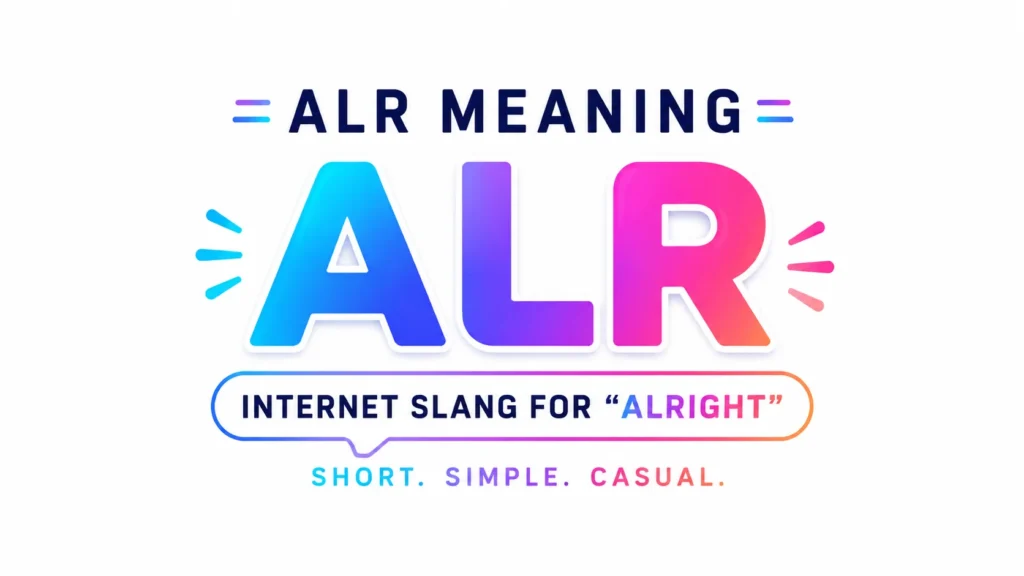
What does “ALR” mean?
“ALR” is a shortened form of the word “alright.”
It is commonly used in informal digital communication to show:
- Agreement
- Confirmation
- Acceptance
- Mild acknowledgment
In most cases, it simply means:
👉 “Okay” or “Alright”
Examples of meaning in use:
- “We’re meeting at 6?” → “alr”
- “Send me the file.” → “alr”
- “I’ll be there soon.” → “alr”
Important tone note:
Even though it means “alright,” the emotional tone can change depending on how it is used:
- Friendly: “alr 👍”
- Neutral: “alr”
- Slightly cold: “alr.”
Origin & Background
Where did “ALR” come from?
“ALR” developed from the natural evolution of internet slang. As texting became faster and character limits once mattered more, users started shortening common words.
“Alright” became:
- alright → alr
This shortening trend was driven by convenience and speed rather than formal grammar rules.
Social media influence
Platforms like TikTok, Instagram, and messaging apps like WhatsApp helped spread this abbreviation globally.
Short replies became the norm, especially in fast comment sections and private chats.
Evolution of meaning
Originally, “alr” was just a typing shortcut. Over time, it gained emotional layers:
- Quick agreement
- Passive response
- Minimal engagement
- Even emotional detachment in some cases
This shift shows how digital language evolves beyond grammar into emotional expression.
Real-Life Conversations (MANDATORY)
WhatsApp chat example
Person A: Are you coming to the meeting?
Person B: alr, I’m on my way
And,
Person A: Don’t forget the report
Person B: alr 👍
Instagram DM example
Person A: That outfit looks perfect on you!
Person B: alr thanks 😄
And,
Person A: Post more pics like this
Person B: alr I will
TikTok comment section
User A: Part 2 please
Creator: alr coming soon
User A: This video is confusing
Creator: alr I’ll explain better next time
Casual text message
Friend A: Let’s chill tonight
Friend B: alr, what time?
Friend A: I’m tired today
Friend B: alr rest well
Emotional & Psychological Meaning
What emotion does “alr” express?
At a surface level, “alr” shows agreement. But emotionally, it can carry different undertones:
- Neutral acceptance
- Low emotional energy
- Casual acknowledgment
- Subtle detachment
Why people use it
People prefer “alr” because:
- It saves time
- It feels effortless
- It avoids over-explaining
- It fits fast-paced conversations
What it reveals about modern communication
Short forms like “alr” show that digital communication is becoming:
- Faster
- Less formal
- Emotionally compressed
A single word now replaces full sentences, which can sometimes reduce emotional clarity.
Personal-style scenario
Imagine someone is tired after a long day and receives multiple messages. Instead of typing “Okay, I understand,” they simply reply “alr.”
It’s not rude—it’s mental energy conservation.
That’s how modern texting works: efficiency often wins over expression.
Usage in Different Contexts
Social media
On platforms like Instagram or TikTok, “alr” is common in comments and replies. It feels natural and quick.
Example:
- “New video dropping tonight” → “alr 🔥”
Friends & relationships
Among friends, “alr” is very common and usually harmless.
Example:
- “Pick you up at 8?” → “alr”
Tone depends on emojis and context.
Work / professional settings
In professional environments, “alr” is not recommended. It can sound too casual or even unprofessional.
Better alternatives:
- “Alright”
- “Okay”
- “Confirmed”
Casual vs serious tone
Casual:
- “alr 👍” (friendly)
Neutral:
- “alr”
Serious misunderstanding risk:
- “alr.” (can feel cold or distant)
When NOT to Use It
In professional communication
Avoid using “alr” in:
- Emails
- Business messages
- Academic writing
- Formal requests
Cultural sensitivity
In some cultures, short replies may be interpreted as:
- Rude
- Disinterested
- Emotionally detached
Miscommunication risks
If someone expects emotional clarity, “alr” might feel too minimal or dismissive.
Common Misunderstandings
Tone confusion
People often misread “alr” as:
- Annoyance
- Disinterest
- Passive-aggression
Even when it’s not intended that way.
Literal vs emotional meaning
Literal meaning:
- “Alright” = agreement
Emotional meaning:
- Depends on context, punctuation, emojis, and relationship
Overthinking problem
A major issue in texting culture is overanalyzing short replies like “alr,” even when the sender had no negative intent.
Comparison Table
| Term | Meaning | Tone | Usage |
|---|---|---|---|
| alr | alright | casual | everyday texting |
| ok | okay | neutral | general agreement |
| kk | okay cool | slightly casual | quick replies |
| sure | agreement | polite | flexible tone |
| fine | acceptable | neutral to passive | depends on context |
| got it | understood | clear | instruction-based |
Key Insight
“ALR” is not just a shortcut—it is a tone-sensitive expression. The same word can feel warm or distant depending entirely on context.
Variations / Types
1. alr
Basic form of alright.
2. alr 👍
Friendly agreement.
3. alr.
Slightly cold or neutral tone.
4. aight
Urban slang version of alright.
5. alright
Full formal version.
6. alr then
Slightly dismissive or ending tone.
7. alrrr
Extended form showing casual friendliness.
8. alr cool
Agreeable and relaxed tone.
9. alr bet
Strong agreement, Gen Z style.
10. alr lol
Lighthearted or joking agreement.
How to Respond When Someone Uses It
Casual replies
- “cool 👍”
- “nice”
- “okay”
Funny replies
- “That’s the shortest reply ever 😂”
- “Bro used minimum words lol”
Mature replies
- “Alright, noted.”
- “Got it, thanks.”
Respectful replies
- “Okay, I understand.”
- “Thanks for confirming.”
Regional & Cultural Usage
Western culture
Widely used in everyday texting, especially among younger users.
Asian culture
Used heavily in digital chat apps, often mixed with emojis for clarity.
Middle Eastern culture
Common in informal English chats, especially among students and professionals.
Global internet usage
“alr” is universally recognized due to global social media exposure.
Generational differences
Gen Z:
- Uses “alr” frequently and casually
Millennials:
- Prefer “okay” or “alright” more often
Is It Safe for Kids?
Yes, “alr” is completely safe as a slang term. It contains no harmful meaning. However, kids should learn:
- When informal language is appropriate
- When formal communication is required
- How tone changes meaning in texting
FAQs
What does alr mean in texting?
It means “alright,” used to show agreement or confirmation.
Is alr rude?
Not always. It depends on tone, context, and relationship.
Is alr the same as okay?
Yes, both express agreement, but “alr” is more informal.
Why do people use alr instead of alright?
Because it is faster and easier to type in casual chats.
Can I use alr in professional messages?
It is not recommended for formal communication.
Does alr mean anger?
No, but it can sound cold if used without context.
Is alr popular on TikTok and Instagram?
Yes, it is widely used on platforms like TikTok and Instagram.
Conclusion
The meaning of “alr” may look simple, but its usage reflects how modern communication has evolved. It is more than just a shortcut for “alright”—it is a tone-based expression that adapts to different emotions and situations.
Understanding it helps you communicate more naturally in digital spaces, especially where conversations move fast and attention spans are short.
Used correctly, “alr” keeps conversations smooth and effortless. Used carelessly, it can feel distant. The key is context, not just the word itself.