If you’ve ever seen someone reply with “alr” in a text and felt unsure whether they agreed, ignored you, or simply shortened a word, you’re not alone. This tiny three-letter slang has become one of the most common expressions in digital conversations, especially among Gen Z and younger millennials.
The confusion comes from how flexible it is. “ALR” can feel casual, slightly distant, or completely neutral depending on the tone of the chat. That’s exactly why people search for “alr meaning text”—they want clarity in a space where tone is often missing.
Understanding “alr” is more than just decoding slang. It’s about reading digital emotion, intent, and context in modern communication.
ALR Meaning in Text – Quick Meaning
Clear Definition
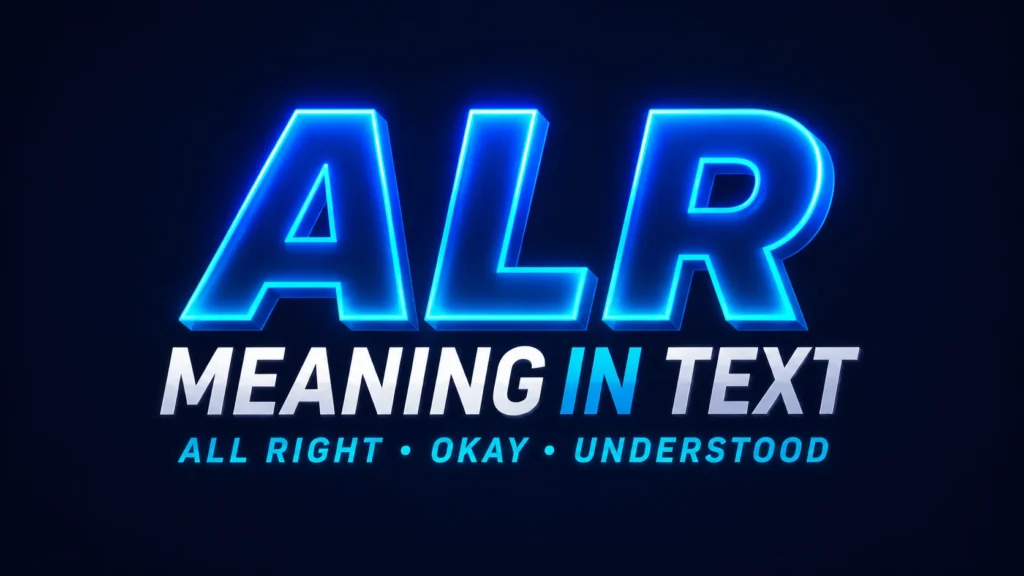
“ALR” is a shortened form of “alright.” It is commonly used in informal digital communication like texting, social media chats, and comment replies.
In most cases, it means:
- Okay
- Fine
- Got it
- Sure (depending on tone)
It is typically used when someone wants to keep a response short and casual.
Common Examples
- “You coming at 6?” → “alr”
- “I’ll send it later.” → “alr”
- “We’re meeting tomorrow.” → “alr cool”
Tone Variations
Even though the meaning stays similar, the emotional tone can shift:
- Friendly: “alr 👍”
- Neutral: “alr”
- Slightly uninterested: “alr.”
Origin & Background
Where “ALR” Came From
“ALR” comes directly from the abbreviation of the word “alright.” It first gained popularity in SMS texting culture when character limits encouraged people to shorten words.
As messaging apps evolved, shorter forms like “ok,” “k,” and “alr” became part of everyday digital speech.
Cultural Influence
The rise of internet culture played a major role:
- Early texting (SMS era) encouraged abbreviations
- Gaming chats made fast replies normal
- Social media platforms like Snapchat, TikTok, and Instagram normalized slang-heavy communication
Social Media Impact
Today, “alr” is widely used in:
- TikTok comment sections
- Instagram DMs
- Discord chats
- Snapchat streak conversations
It has become part of the “low-effort but meaningful” response culture.
How Meaning Evolved
Originally neutral, “alr” has developed subtle emotional layers:
- Agreement
- Passive acceptance
- Mild disinterest (depending on punctuation or context)
Real-Life Conversations (MANDATORY)
WhatsApp Chat
Person A: Are you still coming tonight?
Person B: alr
Person A: Cool, see you at 8 then
Instagram DM
Person A: I posted your picture 😂
Person B: alr bruh
Person A: It’s going viral lol
Person B: 💀
TikTok Comment Thread
User A: This trend is getting old
User B: alr but still funny tho
User C: facts
Text Message
Person A: I’ll be late by 10 minutes
Person B: alr no problem
Emotional & Psychological Meaning
What Emotion It Expresses
“ALR” is interesting because it doesn’t strongly express emotion. It often reflects:
- Calm acceptance
- Emotional neutrality
- Quick acknowledgment
- Sometimes mild detachment
Why People Use It
People prefer “alr” because:
- It saves time
- It feels casual
- It avoids over-explaining emotions
- It keeps conversations lightweight
What It Reveals About Modern Communication
Modern texting is fast, and emotional clarity is often reduced. “Alr” represents:
- Efficiency over expression
- Short attention spans in chat culture
- Preference for minimal replies
Short Real Scenario
Imagine someone texting a friend after a long day:
“I’m too tired to talk much today.”
The reply: “alr”
That single reply can feel comforting or distant depending on the relationship. This is why context matters so much.
Usage in Different Contexts
Social Media
On platforms like TikTok or Instagram:
- Used in comments as quick agreement
- Often paired with emojis like 👍 or 💀
- Can show casual engagement
Friends & Relationships
Between friends:
- Shows relaxed agreement
- Can mean “I understand”
- Sometimes used when someone is busy or distracted
Work / Professional Settings
In professional communication:
- Generally not recommended
- May seem too informal or uninterested
- Better alternatives: “Alright,” “Noted,” or “Okay”
Casual vs Serious Tone
- Casual: “alr lol”
- Neutral: “alr”
- Slightly cold: “alr.”
When NOT to Use It
In Formal Communication
Avoid using “alr” in:
- Emails
- Job messages
- Academic writing
- Client communication
Cultural Sensitivity
In some cultures or professional environments, abbreviations may be seen as:
- Disrespectful
- Too casual
- Lacking effort
Situations That Can Cause Misunderstanding
- Emotional conversations
- Apology messages
- Serious discussions
Example:
“I’m really upset about what happened.”
Reply: “alr”
This can feel dismissive.
Common Misunderstandings
Tone Confusion
People often misinterpret “alr” as:
- Rude
- Passive-aggressive
- Disinterested
But in many cases, it simply means “okay.”
Literal vs Intended Meaning
- Literal: “alr = alright”
- Intended: “I acknowledge what you said”
Emotional Misreading
Because texting lacks voice tone, “alr” can sound colder than intended.
Comparison Table
| Term | Meaning | Tone | Usage |
|---|---|---|---|
| alr | alright / okay | neutral | casual texting |
| ok | okay | neutral | universal |
| k | okay (short) | sometimes cold | quick replies |
| sure | agreement | positive | slightly warmer |
| bet | agreement/confirmation | confident | Gen Z slang |
Key Insight
“Alr” is not just a shortcut—it’s a tone-sensitive expression that depends heavily on context and relationship between speakers.
Variations / Types
1. alr
Standard form of alright.
2. alr.
Slightly colder tone, often seen as less enthusiastic.
3. alr 👍
Friendly confirmation with emoji support.
4. alrr
Extended version showing casual friendliness.
5. alr lol
Light and humorous acceptance.
6. aight
Urban slang variation of alright.
7. ok alr
Double confirmation, slightly stronger agreement.
8. alr then
Used when ending a topic.
9. alr bet
Agreement with enthusiasm.
10. alr fine
Reluctant acceptance.
How to Respond When Someone Uses It
Casual Replies
- “cool 👍”
- “okie”
- “got it”
Funny Replies
- “That’s all you got? 😭”
- “Short and powerful reply 😂”
- “Bro used minimum words”
Mature Replies
- “Alright, thanks for confirming.”
- “Perfect, noted.”
Respectful Replies
- “Okay, I understand.”
- “Alright, let me know if anything changes.”
Regional & Cultural Usage
Western Culture
- Very common in US/UK texting culture
- Mostly neutral slang
- Widely accepted in informal chats
Asian Culture
- Used heavily among younger users
- Popular in gaming and social media communities
- Sometimes seen as too casual in formal contexts
Middle Eastern Culture
- Used mainly by younger, English-speaking users
- Often borrowed from global internet slang
Global Internet Usage
- Universally understood in online communication
- Strong presence in meme culture and short replies
Generational Differences
- Gen Z: uses it daily without thinking
- Millennials: use it occasionally
- Older generations: may find it unclear or too informal
Is It Safe for Kids?
Yes, “alr” is generally safe for kids to use. It is simply a shortened form of “alright” and does not contain harmful or inappropriate meaning.
However, children should still learn:
- When formal language is needed
- How tone can be misunderstood in texting
- How context changes meaning
FAQs
What does ALR mean in texting?
It means “alright,” used as a casual way to say okay or agree.
Is ALR rude?
Not always. It depends on tone and context. It can sound neutral or slightly distant.
Is ALR slang?
Yes, it is modern internet slang derived from “alright.”
Where is ALR commonly used?
It is used in texting, Snapchat, Instagram, TikTok, and gaming chats.
Can I use ALR in formal messages?
No, it is better to use “alright” or “okay” in formal communication.
Does ALR mean agreement?
Yes, most of the time it indicates agreement or acceptance.
Why do people use ALR instead of OK?
Because it feels more casual, modern, and fast to type.
Conclusion
“ALR” may look small, but it plays a big role in modern digital communication. It reflects how people today prefer quick, simple, and context-driven expressions instead of full sentences.
Understanding it helps you read tone better, avoid misunderstandings, and communicate more naturally in online spaces. Like many slang terms, its meaning is simple—but its emotional impact depends entirely on how and where it’s used.
As digital language continues to evolve, “alr” is a reminder that even the shortest words can carry subtle meaning in everyday conversations.